VW-01 · Performance restomod
Black Index
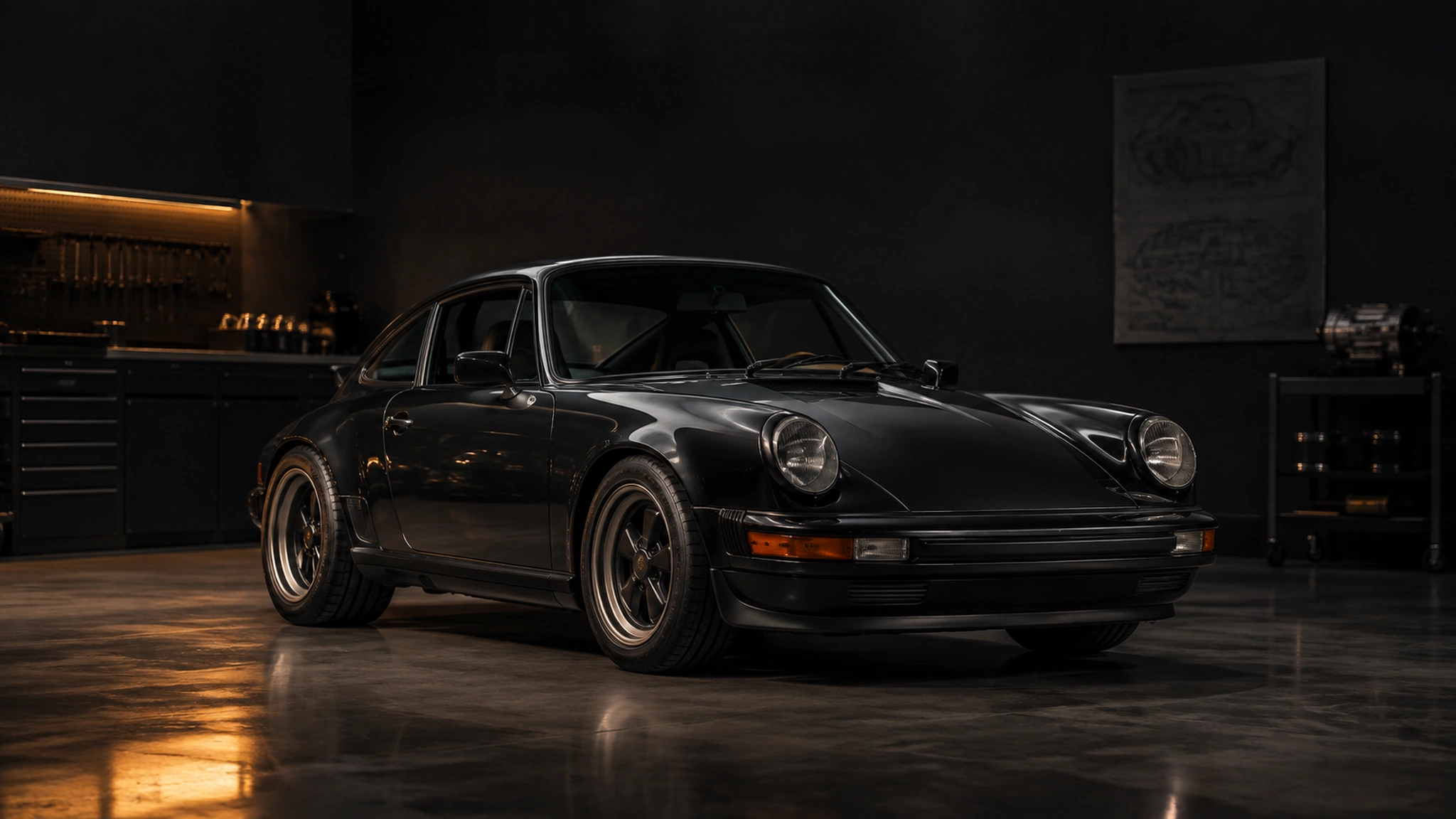
A 964 considered as a precise road instrument rather than a display object.
VW-01
Project identity
- Build
- Black Index
- Base vehicle
- Porsche 911 (964)
- Commission type
- Performance restomod
- Project index
- VW-01
- Guiding principle
- Response without display
- Intended use
- Focused road use and unhurried distance
- Material direction
- Dark leather and technical textile establish a low-glare cabin, while satin aluminium and a narrow oxblood stitch identify touchpoints without becoming decoration.
Project thesis
The proposition
Black Index treats the compact architecture of the 964 as the basis for a road car that stays alert near home and composed across distance.
The proposal removes the visual shorthand of a track build and concentrates on the exchanges that matter from the driver’s seat. Proportion, response and a lower sensory load in the cabin carry the identity.
- Assessment boundary
- Any real 964 would require its own evidence-led inspection before scope could be defined; this study establishes priorities rather than assuming a starting condition.
- Preservation principle
- Retain the compact silhouette and direct relationship between driver, controls and road while filtering out additions that turn function into costume.
- Driving character
- Immediate in response, legible at the limit of everyday pace and settled enough to make a long journey feel natural.
- Design vocabulary
- Dark planes, functional contrast, fine instrument markings and interventions that follow the existing silhouette rather than compete with it.
Productive tensions
- Immediate response versus long-distance composure
- Dark visual unity versus clear functional orientation
Compact architecture
Origin
The 964 begins this study as a recognisable piece of road-car architecture, not as a blank surface for a performance theme.
Its short visual mass and close relationship between cabin and extremities suggest a car that communicates through position and response. The proposal values that concentration, using it as the fixed reference for every later choice.
A second ambition sits beside that immediacy: the ability to cover distance without turning the cabin into a noisy test of commitment. Black Index therefore rejects the look of a track prop and seeks intensity without demonstrative aggression.
Evidence before scope
Assessment
The concept defines a method of reading proportion, ergonomics and use while leaving the condition of any real car open to inspection.
Assessment would begin with the clarity of the form: how surfaces meet, whether prior interventions disturb the silhouette and which elements still explain the original design. No mechanical or structural conclusion is assumed in advance.
The driver interface carries equal weight. Seating, sightlines, control effort, storage and acoustic fatigue would be read against the intended mix of focused road use and long travel, because a convincing brief must respond to the individual car and its future role.
Intensity through use
Direction
Mechanical immediacy and visual calm are treated as complementary rather than opposing qualities.
The proposed rebuild avoids exaggerated aero, racing graphics and accessories whose main task is to announce intent. A deep, low-reflection palette allows the compact profile and the car’s reactions to carry the message instead.
Functional contrast is concentrated around controls, sightlines and service points. The concept should feel alert when asked, yet visually settled at rest, with no single intervention trying to dominate the reading of the whole.
Chapter decisions
- No track-derived decoration
- Road response before peak figures
Before / Reborn
The same silhouette, resolved with restraint.
The comparison moves from a worn and visually unsettled starting point towards a darker, more coherent restomod direction. It illustrates design intent rather than a documented completed rebuild.
Drag the divider on the image, choose a position, or use the arrow keys to compare both conceptual states.
This comparison illustrates a fictional design direction. It does not document a completed vehicle restoration.
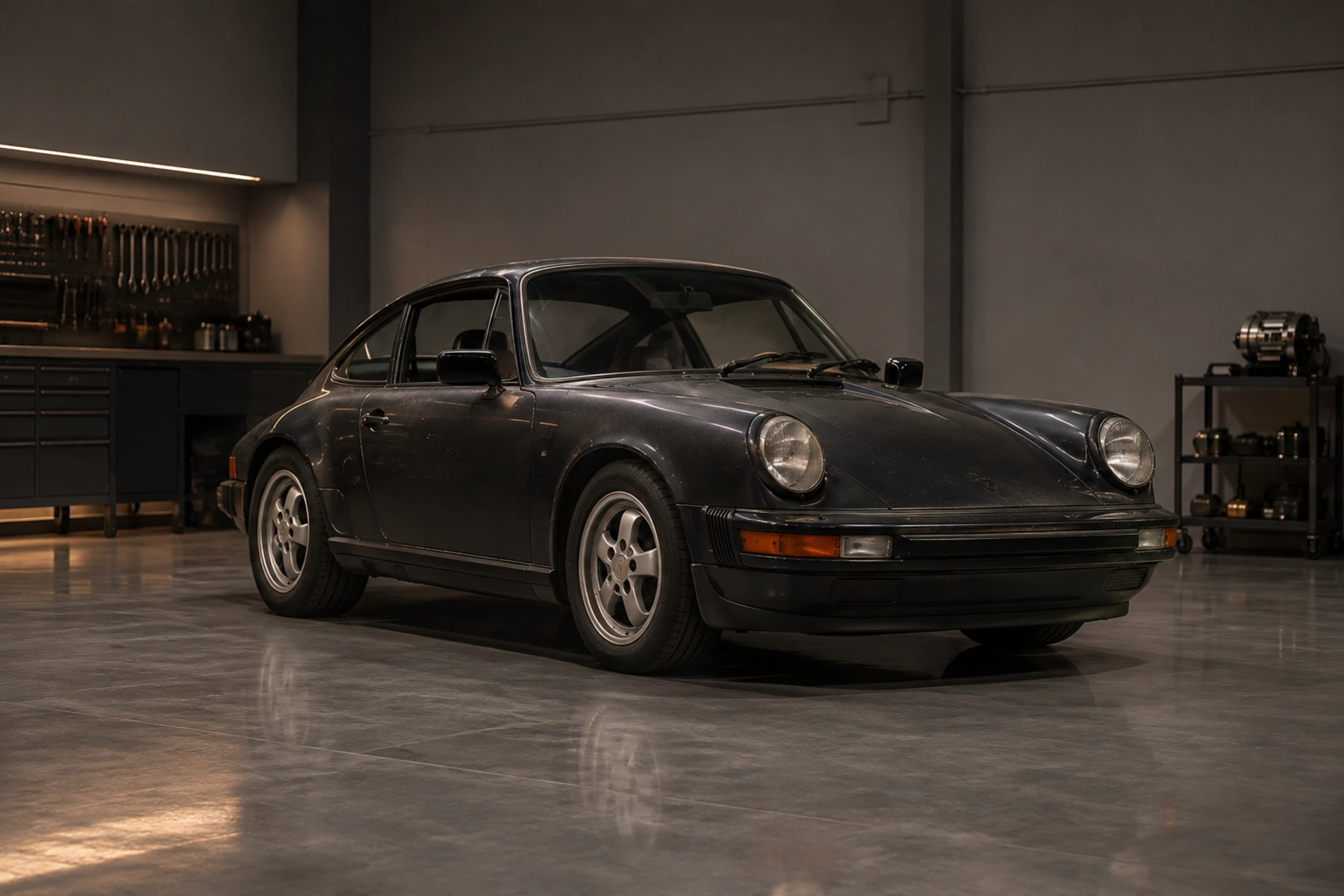

Interactive comparison is unavailable without JavaScript. Both conceptual states remain visible.
Silhouette retained
Body and structure
Changes to the body are justified only where cooling, stability or everyday access asks for them.
The principal profile remains intact. Surface transitions, apertures and panel relationships would be reviewed as one composition so that a functional revision never reads like an unrelated attachment.
Gap consistency and the way light moves across adjoining planes matter more here than added visual mass. The structural brief favours legibility and durable access, while leaving exact repair methods to evidence gathered from the individual vehicle.
Communication over numbers
Powertrain and chassis
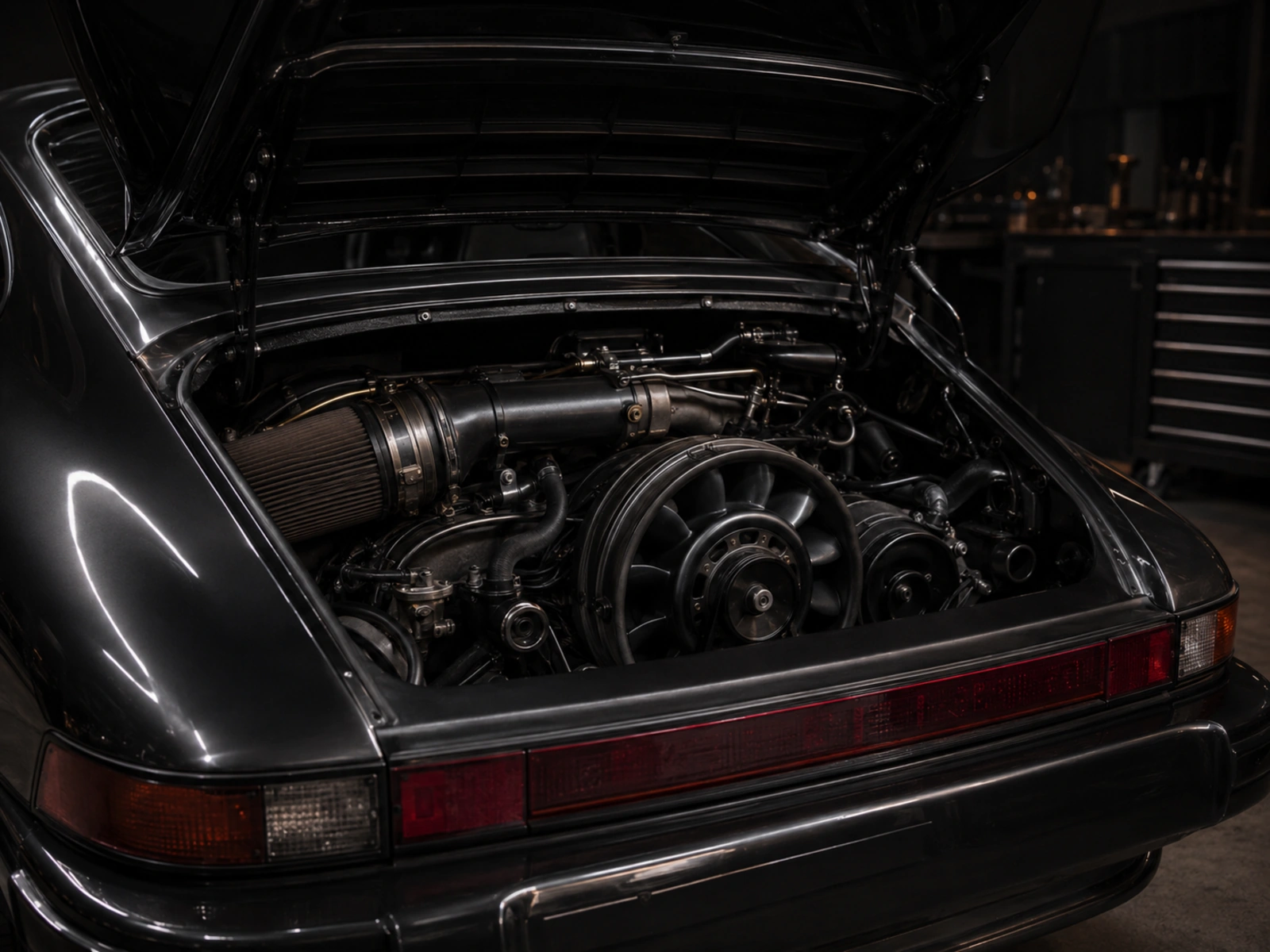
The engineering brief prioritises response, steering information and progressive control rather than a headline output.
Inputs should produce readable changes in pace and attitude. Throttle response, steering build-up and braking progression are considered together so the driver can understand what the car is doing without abrupt transitions.
Body control must support that exchange while preserving stability and comfort across sustained road use. Thermal management, service access and repeatable behaviour form part of the same proposal; the concept does not chase a maximum figure detached from use.
Low-glare focus
Cabin and materials
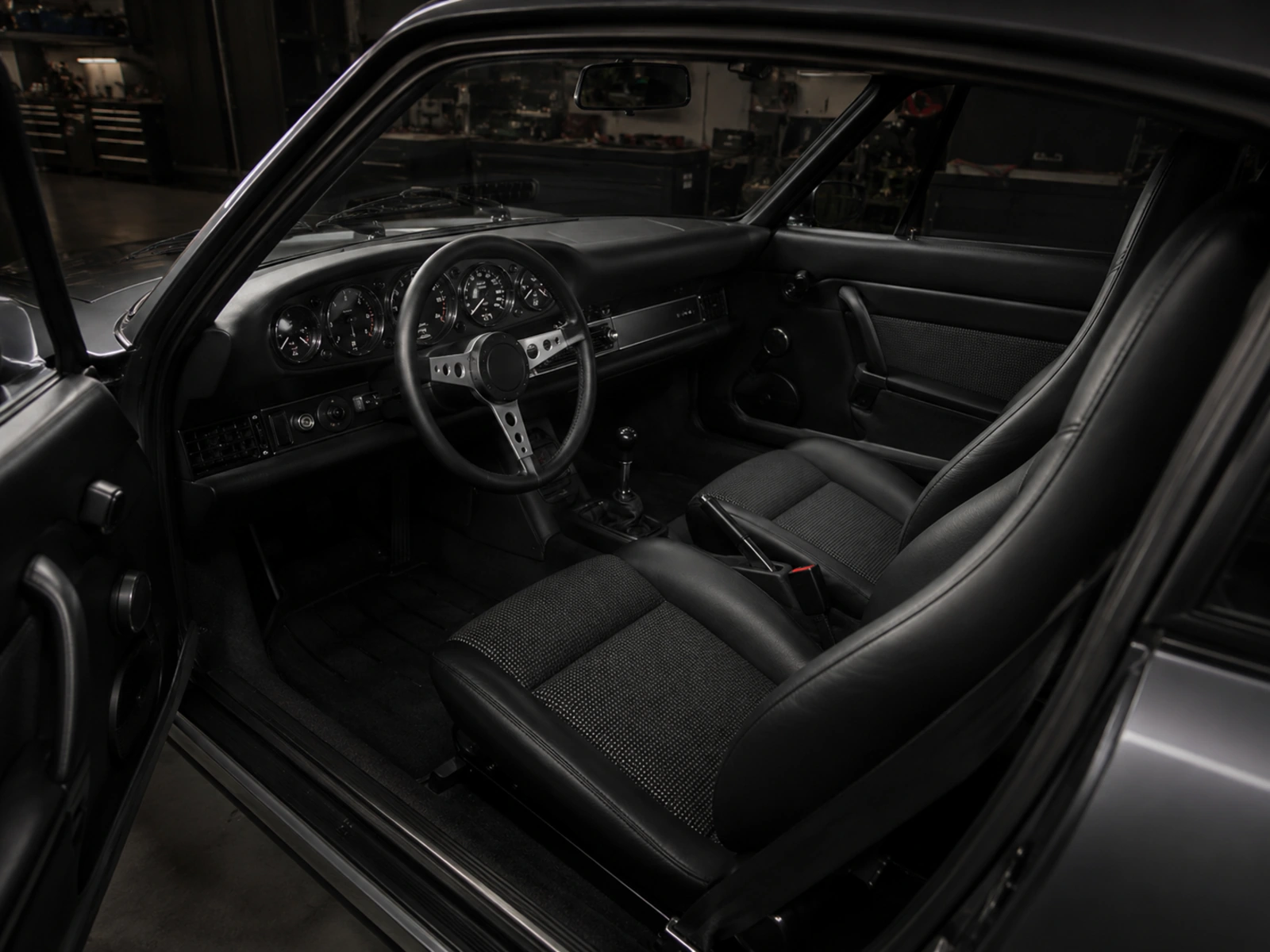
The cabin supports concentration first, then adds comfort where it reduces fatigue without isolating the driver.
Dark leather carries high-contact areas, technical textile breaks up broad surfaces and satin aluminium marks controls with a cooler tactile cue. Oxblood appears only as a narrow stitch or edge, giving orientation rather than ornament.
Instruments remain easy to scan and physical interfaces retain priority over decorative electronics. Seating and touchpoints are framed around long-duration support while keeping the close, direct relationship that gives the cabin its purpose.
Presence without theatre
Final character
Black Index is intended to feel concentrated and light in response, yet unforced during a long day on the road.
From outside, the car would communicate through stance, proportion and the absence of visual noise. Nothing needs to imitate competition machinery for the proposal to carry authority.
From the driver’s seat, its identity comes from a coherent sequence of inputs and information: quick to understand, rewarding to place and calm enough to keep the route—not the object—at the centre of a journey.
04—06
Key decisions
The proposal is organised around choices that govern the brief; these are design priorities, not completed workshop operations.
Preservation
Retain the compact profile
The project direction keeps the 964 silhouette as the main source of identity.
Restraint
Reject the track costume
The proposed rebuild avoids aero and graphics that announce performance without improving road use.
Engineering
Prioritise readable response
The concept prioritises steering, braking and body communication over a peak figure.
Usability
Support distance
Cabin calm and ergonomic support extend useful driving time without muting the car.
Material
Limit the accent
Oxblood is reserved for orientation at touchpoints rather than broad decoration.
Material direction
Material direction
A qualitative palette defines relationships of touch, contrast and maintenance. It does not represent live stock or named suppliers.
Dark leather and technical textile establish a low-glare cabin, while satin aluminium and a narrow oxblood stitch identify touchpoints without becoming decoration.
- Dark leatherPrimary touch surface
- Technical textileLow-glare field
- Satin aluminiumControl marker
- Oxblood stitchRestricted orientation accent
07
Final character
A focused road instrument with quick reactions, a lower sensory load and no need for theatrical proof.
Closing statement
Black Index proposes that intensity can come from the quality of an exchange, not from the volume of its presentation.
Commission
Shape another direction
Use the seven-step local Commission Studio to shape another private exploratory brief.