VW-02 · Factory-correct restoration
Silver Arc
A disciplined restoration study led by proportion, finish and restraint.
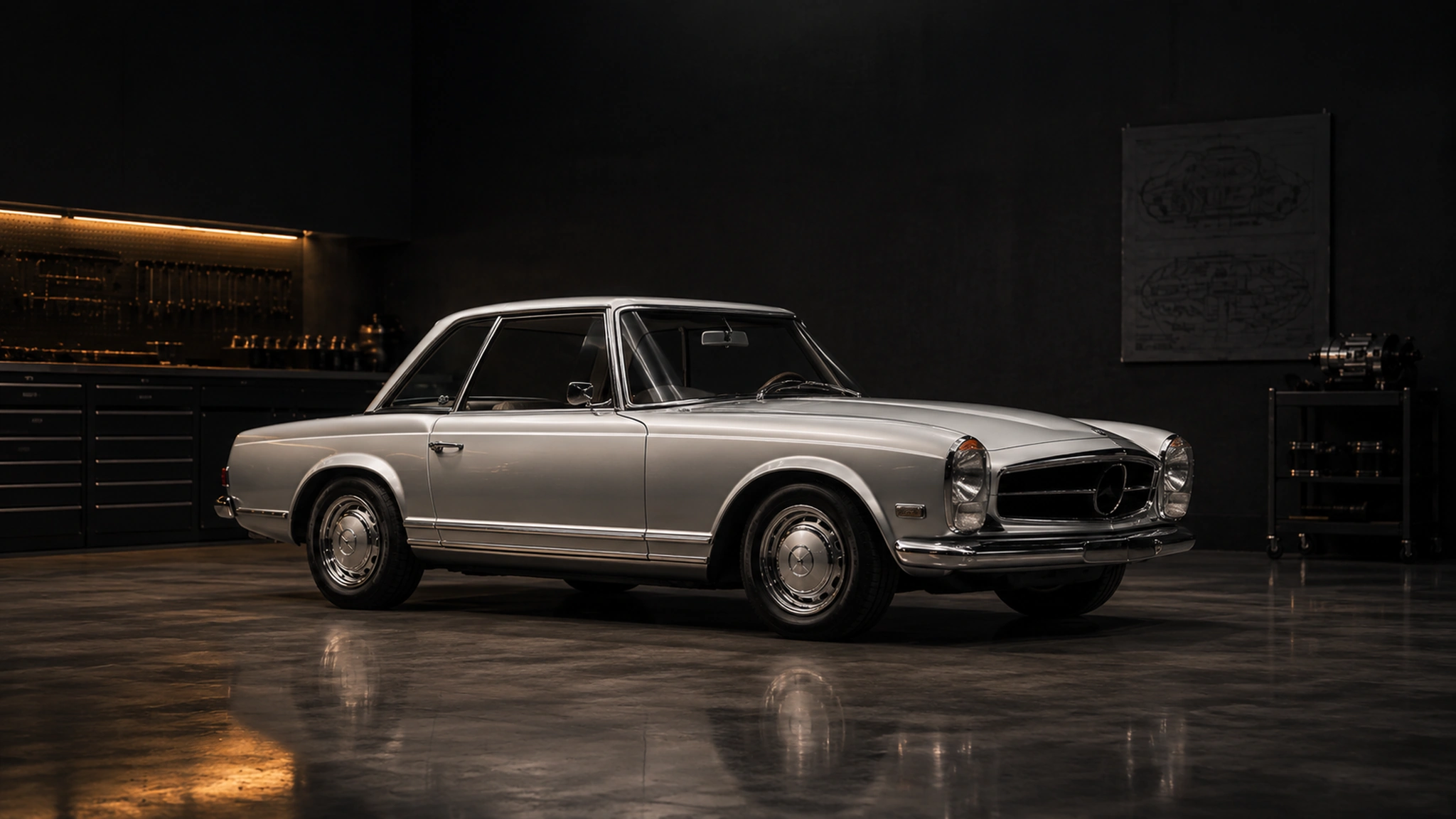
VW-02
Project identity
- Build
- Silver Arc
- Base vehicle
- Mercedes-Benz SL (W113)
- Commission type
- Factory-correct restoration
- Project index
- VW-02
- Guiding principle
- Restore coherence, not a story
- Intended use
- Elegant open-road grand touring
- Material direction
- A pale exterior field is balanced by deep blue leather, fine textile and limited timber, with bright metal treated as punctuation rather than jewellery.
Project thesis
The proposition
Silver Arc frames factory-correct restoration as a discipline of proportion, surface and material relationships without inventing provenance or polishing away depth.
The proposal returns attention to the lightness of the W113 form. Its aim is neither a restomod nor a frozen display object, but a coherent grand tourer whose visual and operating language remain recognisably its own.
- Assessment boundary
- Completeness, prior finishes and the relationship between body, brightwork, glass and seals would be documented before any decision; no component survival is assumed here.
- Preservation principle
- Protect the car’s light visual rhythm and period material language while distinguishing meaningful age from neglect or later inconsistency.
- Driving character
- Fluid, predictable and balanced, with every control reinforcing the relaxed authority of an open-road grand tourer.
- Design vocabulary
- Clear surfaces, fine edges, measured reflections and a light palette in which metal, glass and colour remain separate but related.
Productive tensions
- Renewed finish versus retained material depth
- Operational confidence versus period identity
Proportion as reference
Origin
Silver Arc begins with the W113’s balance of broad surfaces, fine boundaries and an open, lightly drawn cabin.
Factory-correct is interpreted as a demanding framework rather than a command to preserve every trace without judgement. The known design language sets the reference, while the individual car would determine which evidence can responsibly remain.
The study refuses to create a narrative around an imagined example. Its starting point is the model’s visual grammar and the principle that restoration should recover relationships, not manufacture a past.
Document before deciding
Assessment
The proposed assessment separates authentic material age, later inconsistency and neglect without presuming what survives on a real car.
Completeness would be mapped across the body, glass, seals, metal finishes and cabin before removal or refinishing. Photographic and written records would give each decision a traceable basis rather than relying on a general idea of perfection.
Wear can carry meaning, but it cannot automatically excuse failure or mismatch. The assessment would ask whether a surface still belongs to the car’s coherent reading, whether it can remain useful and how any intervention changes the balance around it.
Return without reinvention
Direction
The brief restores visual and operating coherence rather than introducing a new personality.
There is no restomod layer, artificial ageing or pursuit of a flawless surface that erases every sign of material depth. Gloss, colour and edge definition are balanced so the car reads as a whole rather than as a collection of newly finished parts.
A light, calm palette gives the profile room to breathe. Metal accents remain fine and exact, but they do not overpower paint, glass or the open cabin; restoration serves the existing hierarchy.
Chapter decisions
- No restomod layer
- No artificial patina
Before / Reborn
Proportion restored without rewriting the past.
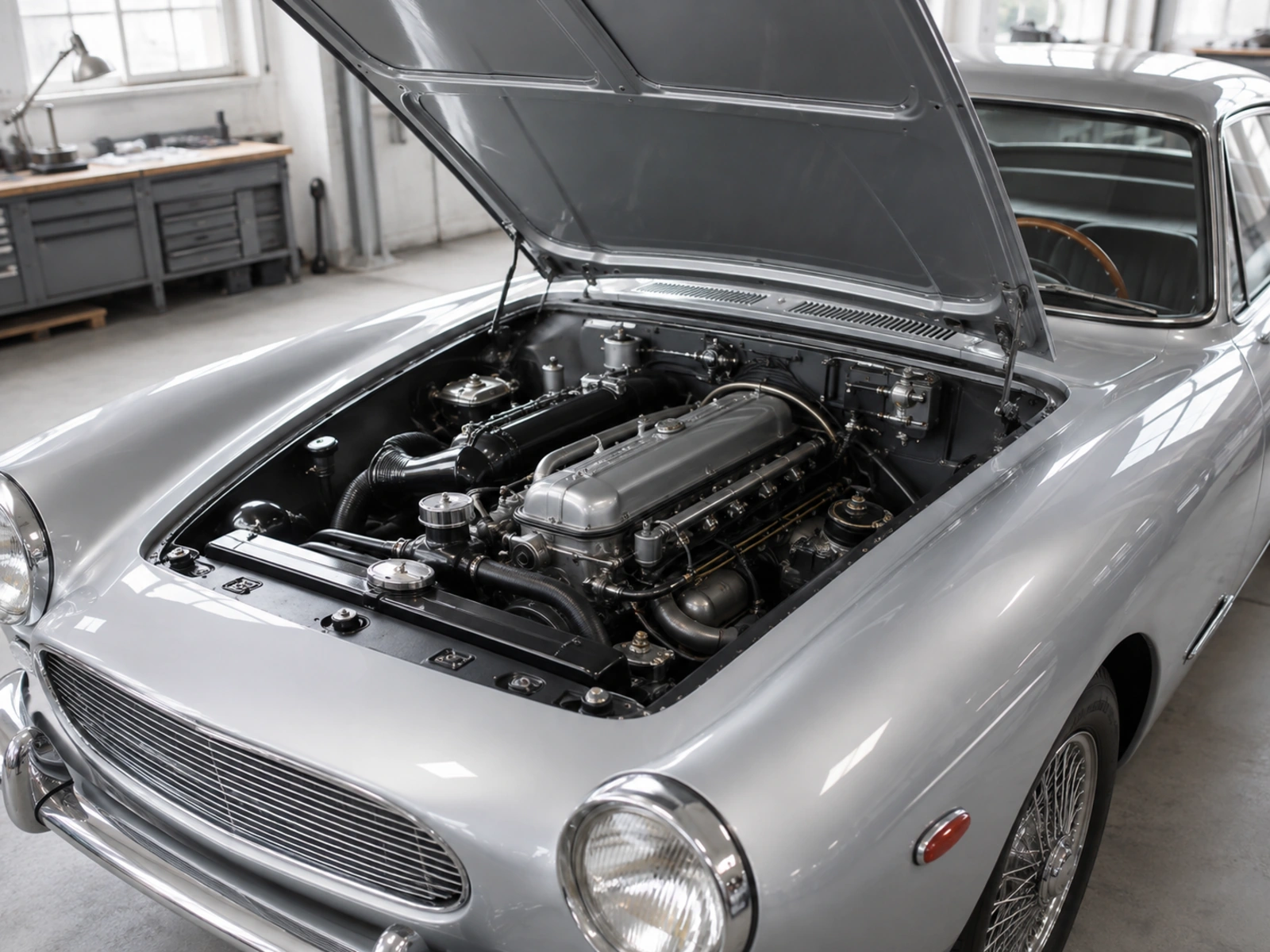
The starting point and proposed result share one frame to show how surface consistency, lightness and restraint can return without manufacturing a history the car never had.
Drag the divider on the image, choose a position, or use the arrow keys to compare both conceptual states.
This comparison illustrates a fictional design direction. It does not document a completed vehicle restoration.
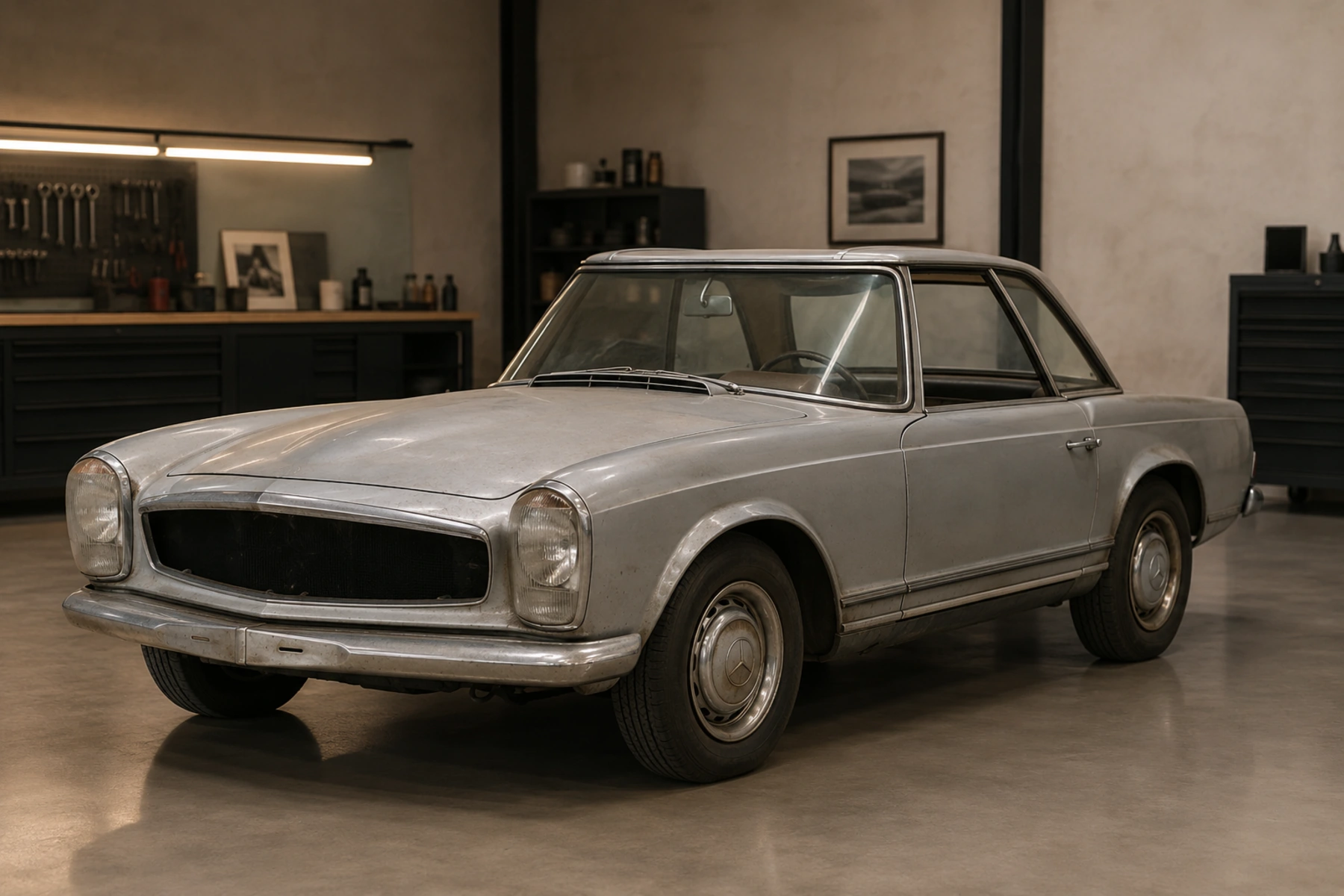
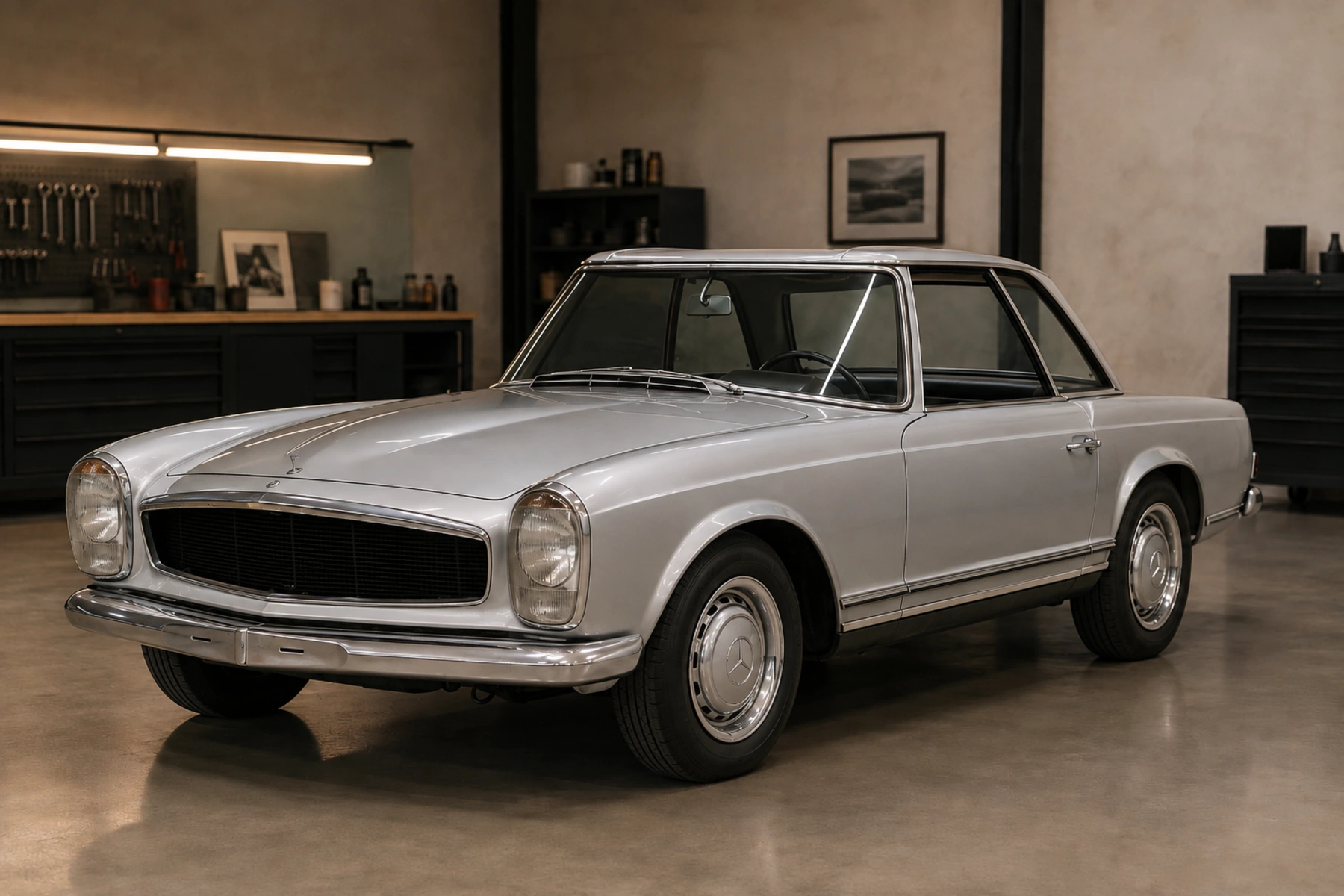
Interactive comparison is unavailable without JavaScript. Both conceptual states remain visible.
Fine edges protected
Body and structure
Panel geometry, gaps, glass and metal finish are treated as one continuous visual system.
The body proposal protects subtle changes of plane and the fine boundaries that keep the form visually light. Exact methods would follow inspection, but the goal is clear: alignment should support the drawing without making the paint appear heavy.
Glass and seals establish another set of lines around the cabin. Their relationship with bright metal and painted edges must remain even and legible, because small inconsistencies can disturb the profile more than a broad surface.
Invisible dependability
Powertrain and chassis
The mechanical direction aims for predictable operation, fluid control and the balance expected of a grand tourer.
The concept prioritises smooth delivery, progressive braking and steering that develops information without artificial sharpness. These qualities preserve the car’s established rhythm rather than translating it into a contemporary performance idiom.
Reliability should remain largely invisible: stable temperatures, clear service access and consistent behaviour support use without becoming a marketing claim. The exact work can only follow an evidence-based assessment of the real vehicle.
Period language, renewed
Cabin and materials
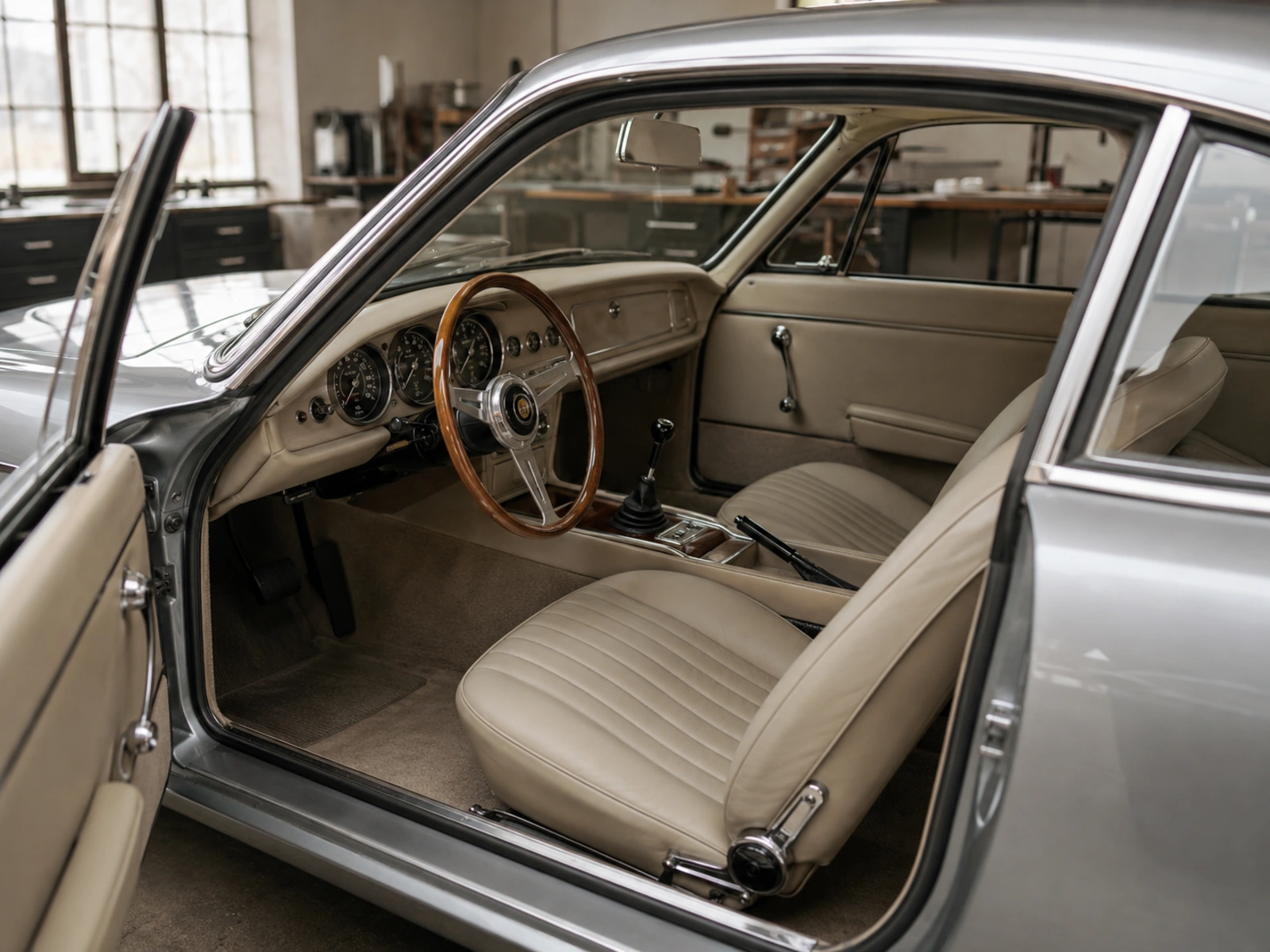
Material choices follow period proportions and tactility without simulating age or adding contemporary visual weight.
Deep blue leather provides the principal field, supported by fine textile and measured timber. Stitching follows the scale of the cabin rather than becoming a graphic device, while metal elements remain cool, thin and secondary.
The proposal avoids false patina and over-soft modern luxury. Comfort comes from correct support, clear controls and balanced surfaces, allowing the cabin to feel complete without suggesting a different era or invented ownership story.
Light, complete, unforced
Final character
Silver Arc is intended to appear complete and elegant without looking newly invented or artificially aged.
The visual result would be defined by the ease with which paint, metal, glass and cabin relate. No element should ask for attention independently; the form regains its lightness through agreement between them.
On the road, the proposed character is fluid and self-possessed. The car does not imitate modern urgency, but supports confident travel with controls and responses that remain faithful to its own vocabulary.
04—06
Key decisions
The proposal is organised around choices that govern the brief; these are design priorities, not completed workshop operations.
Preservation
Document before intervention
The concept prioritises evidence before deciding which age, finish or component can remain.
Restraint
Keep restomod language out
The project direction retains the established operating and visual vocabulary of the grand tourer.
Preservation
Protect fine boundaries
Panel edges, seals and bright finishes preserve the lightness of the original drawing.
Engineering
Make dependability unobtrusive
Predictable operation supports use without turning modernisation into the subject.
Material
Avoid false patina
New work should read naturally without pretending to carry an undocumented past.
Material direction
Material direction
A qualitative palette defines relationships of touch, contrast and maintenance. It does not represent live stock or named suppliers.
A pale exterior field is balanced by deep blue leather, fine textile and limited timber, with bright metal treated as punctuation rather than jewellery.
- Pale paint fieldProportion and reflected light
- Deep blue leatherPrimary cabin field
- Fine bright metalBoundary and punctuation
- Measured timberWarm secondary note
07
Final character
A visually light grand tourer whose renewed coherence never asks the viewer to believe an invented past.
Closing statement
Silver Arc proposes restoration as an act of alignment: enough intervention to recover the whole, never enough fiction to replace it.
Commission
Shape another direction
Use the seven-step local Commission Studio to shape another private exploratory brief.