VW-04 · Bespoke expedition commission
Long Range
An expedition commission shaped by endurance, access and calm utility.

VW-04
Project identity
- Build
- Long Range
- Base vehicle
- Land Rover Defender 110
- Commission type
- Bespoke expedition commission
- Project index
- VW-04
- Guiding principle
- Utility earns every addition
- Intended use
- Extended travel, practical work and simple service
- Material direction
- Durable textile and maintainable surfaces do most of the work; leather is limited to useful touchpoints, while satin metal identifies protection and access.
Project thesis
The proposition
Long Range treats the Defender 110 as a format for travel and work, prioritising service access, variable loads and durable simplicity over an adventure costume.
The proposal keeps utility at the centre and examines every addition through distance, maintenance and resilience. Capability is communicated through clear organisation, not a catalogue of exterior accessories.
- Assessment boundary
- Structure, sealing, protection, electrical systems and service access would require an individual inspection; the study names evaluation areas without claiming discovered faults.
- Preservation principle
- Retain the upright, legible utility form and ensure that proposed systems remain understandable, inspectable and appropriate to real use.
- Driving character
- Predictable under changing loads, calm across distance and easy to diagnose or operate without specialised theatre.
- Design vocabulary
- Upright planes, modular divisions, visible logic and a muted tool-like palette of dark green, graphite and satin aluminium.
Productive tensions
- Protection versus easy inspection
- Extended comfort versus simple maintainability
Utility as identity
Origin
The Defender 110 provides a direct, upright format whose value comes from travel, work and the visibility of its purpose.
Long Range starts from utility rather than from an image of expedition. The body’s clear volumes, accessible edges and adaptable interior suggest a vehicle that should remain understandable even as its role expands.
Distance, serviceability and resilience form the central brief. Accessories are not evidence of capability on their own; each proposed element must explain how it supports use, inspection or recovery without turning the vehicle into a display of intent.
Inspect access and load
Assessment
The assessment framework follows structure, sealing, ergonomics, electrical logic and the way variable loads move through the vehicle.
A real vehicle would be examined for protection, water management, service access and the clarity of previous interventions. This concept does not claim any specific fault; it defines the questions that must be answered before scope is agreed.
Cabin reach, storage, visibility and electrical routing would be read against changing passengers, equipment and road conditions. Load distribution is a design input, not a late accessory problem, and it must remain legible to the person using the vehicle.
Capability without costume
Direction
The direction preserves simplicity and improves weak areas only where travel, access or maintenance justifies a revision.
Exterior additions are limited and organised around actual function. The proposal avoids decorative adventure cues, stacked accessories and equipment whose visual presence exceeds its contribution to the brief.
Dark green, graphite and satin aluminium establish a tool-like language without specifying a paint code or supplier. The result should feel prepared because its systems are ordered, not because every surface carries a signal of toughness.
Chapter decisions
- Function must justify every addition
- No decorative expedition layer
Before / Reborn
Utility retained, visual noise removed.
The comparison keeps the Defender’s practical foundation while showing a proposed direction based on ordered surfaces, controlled protection and fewer decorative expedition cues.
Drag the divider on the image, choose a position, or use the arrow keys to compare both conceptual states.
This comparison illustrates a fictional design direction. It does not document a completed vehicle restoration.
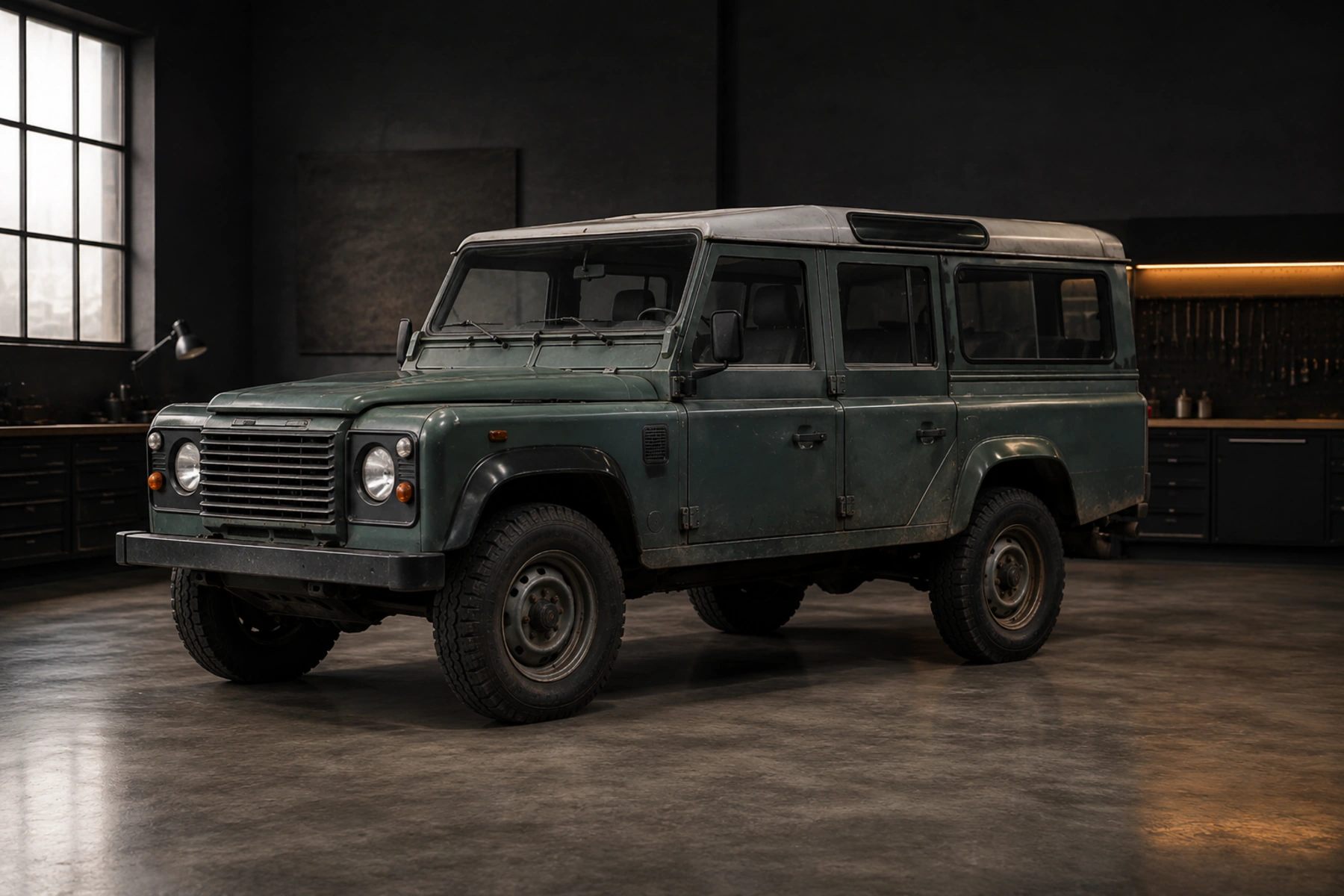
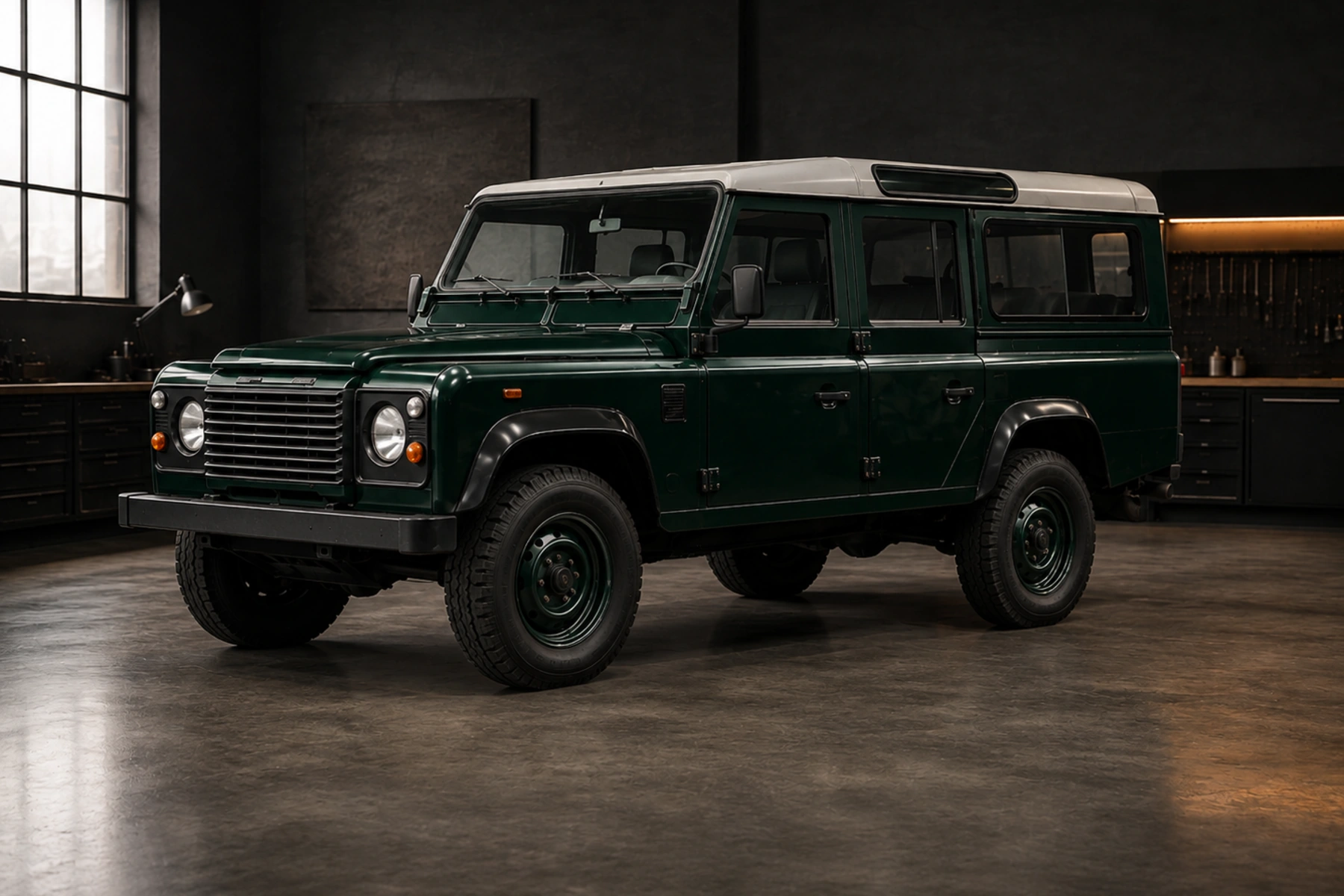
Interactive comparison is unavailable without JavaScript. Both conceptual states remain visible.
Protection remains visible
Body and structure
Structural protection, modular access and easy inspection guide the body proposal while the upright utility silhouette remains intact.
Protective measures should be easy to inspect and should not conceal the areas they are meant to support. Openings, junctions and removable elements are organised so routine access does not require dismantling a decorative shell.
The exterior stays free of unrelated attachments. Modular solutions follow existing divisions and give equipment a defined place, allowing the body to retain its clear purpose instead of becoming a background for accessories.
Predictable under load
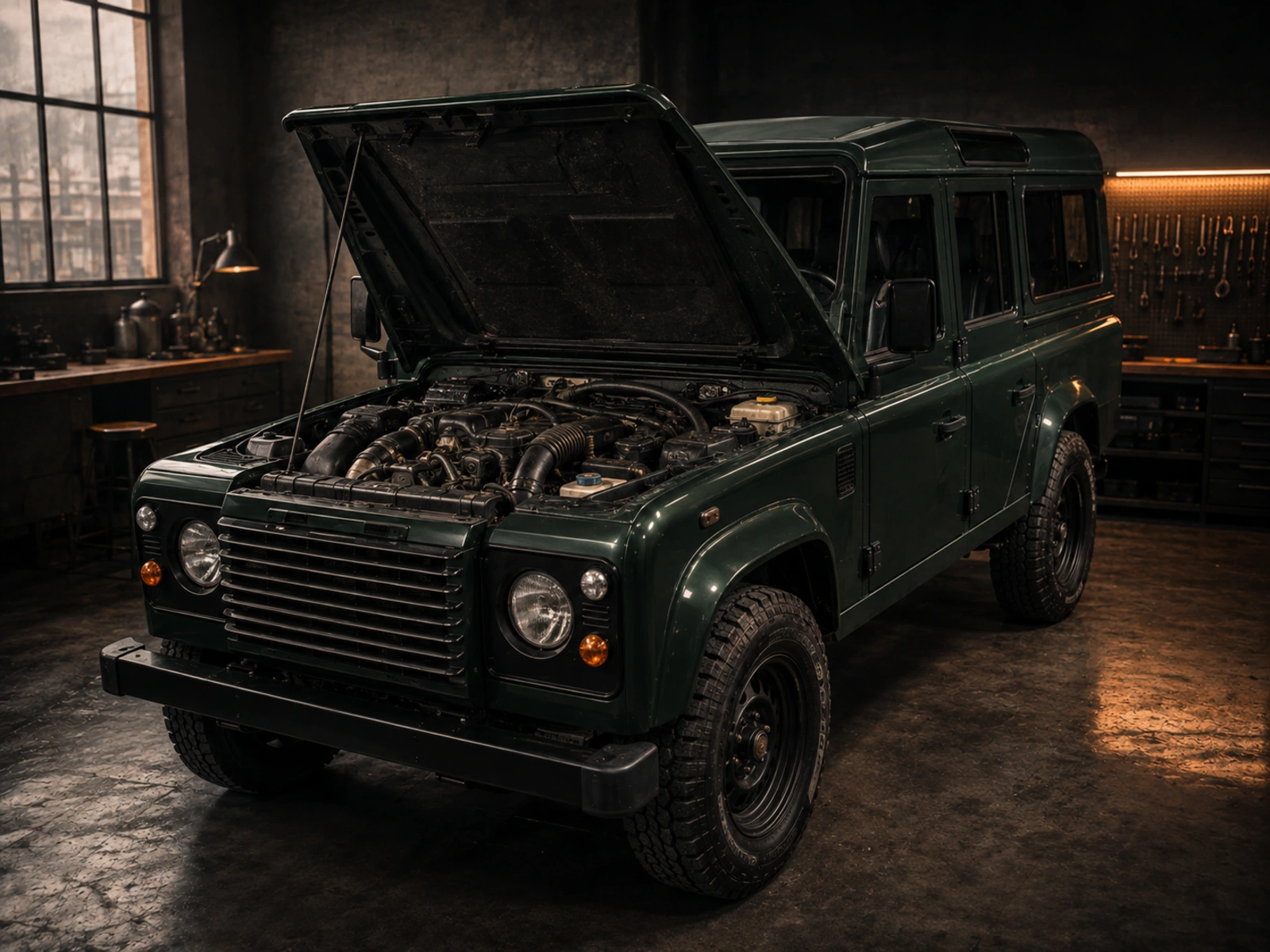
Powertrain and chassis
The engineering brief focuses on cooling, braking, traction, suspension behaviour and diagnostic access across changing loads.
Behaviour should remain progressive as passengers, equipment and surfaces change. Braking and suspension are considered through consistency and control, while traction supports movement without encouraging an abstract pursuit of maximum output.
Electrical routing, cooling and service points remain visible enough to understand and diagnose. The concept values systems that can be checked and maintained logically, with exact solutions determined only after an individual vehicle assessment.
Comfort through ergonomics
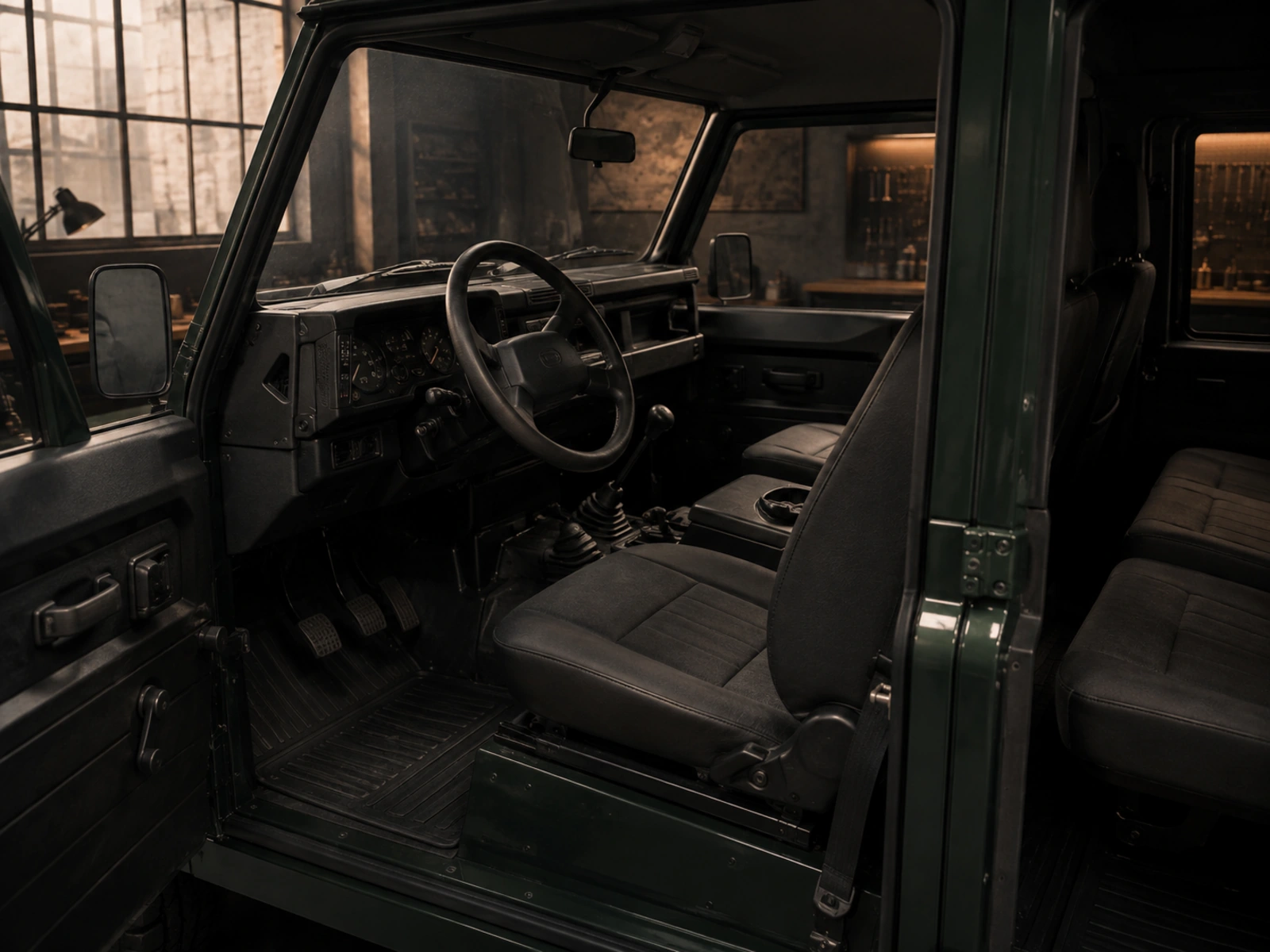
Cabin and materials
Durable surfaces, clear storage and low-effort access produce comfort without introducing fragile decorative luxury.
Resistant textile covers broad areas, maintainable surfaces support frequent contact and leather is reserved for locations where its tactility adds value. Satin metal marks edges and hardware that benefit from a clear visual boundary.
Storage follows repeatable modules and remains understandable when the load changes. The cabin avoids ornamental equipment; comfort comes from reach, support, ventilation, visibility and an interior that can be used without ceremony.
Calm competence
Final character
Long Range is intended to feel prepared for extended use without wearing an expedition identity as decoration.
The vehicle’s exterior remains upright, direct and easy to read. Added systems have defined places and do not compete for attention, allowing capability to appear as organisation rather than accumulation.
For the user, confidence comes from predictable behaviour and understandable access. Long Range is proposed as more credible in travel and work than on display: a tool whose calmness reflects preparation, not spectacle.
04—06
Key decisions
The proposal is organised around choices that govern the brief; these are design priorities, not completed workshop operations.
Preservation
Retain the utility form
The project direction keeps the upright volumes and visible purpose of the Defender 110.
Restraint
Make additions earn their place
The proposed rebuild avoids exterior equipment that cannot explain its contribution to use.
Engineering
Design around variable load
The concept prioritises progressive braking, suspension behaviour and traction as conditions change.
Usability
Keep service routes legible
Access, diagnostics and modular organisation support maintenance away from display settings.
Material
Use materials as tools
Textile, maintainable surfaces and limited leather are assigned by contact and function.
Material direction
Material direction
A qualitative palette defines relationships of touch, contrast and maintenance. It does not represent live stock or named suppliers.
Durable textile and maintainable surfaces do most of the work; leather is limited to useful touchpoints, while satin metal identifies protection and access.
- Muted deep greenPrimary exterior field
- Durable textileBroad cabin surface
- Maintainable graphiteHigh-use protection
- Satin aluminiumAccess and hardware marker
07
Final character
A distance-first utility vehicle whose capability is expressed through predictable behaviour, clear access and disciplined organisation.
Closing statement
Long Range proposes that expedition credibility begins where decorative adventure ends: with systems that remain useful, visible and understandable.
Commission
Shape another direction
Use the seven-step local Commission Studio to shape another private exploratory brief.